Tree service for Mulberry and Fort Meade — phosphate country, Irma's worst winds
Mulberry is the phosphate capital and Fort Meade is the oldest town in Polk. Irma's strongest Polk gusts, near 115 mph, were recorded around here, and the old oaks remember it.
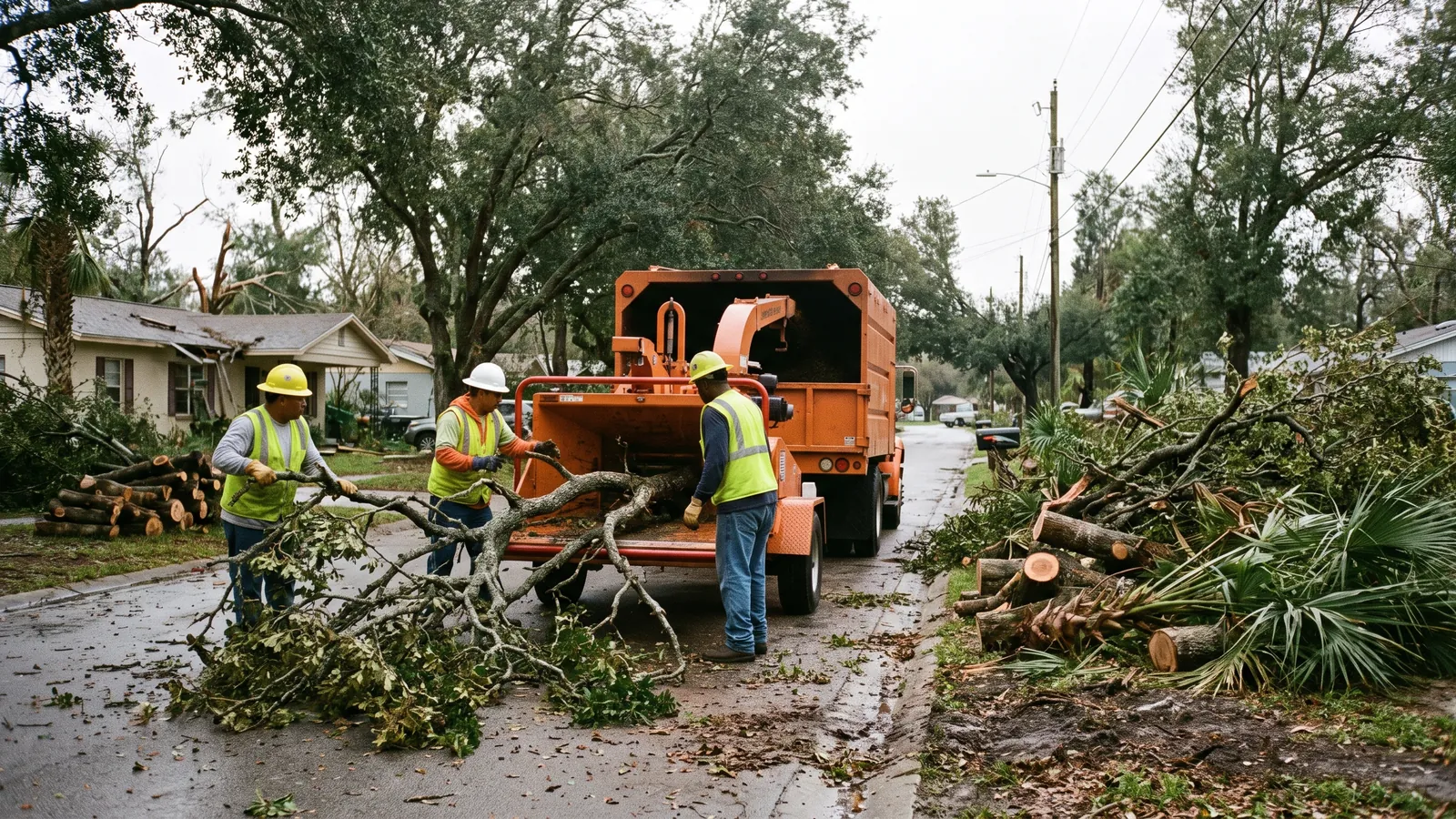
South of Lakeland on SR-37 and SR-60 is phosphate country: Mulberry, about 4,000 people, the self-styled phosphate capital of the world with a museum built around the industry; and Fort Meade, about 5,000, the oldest town in Polk County (1849), on the Peace River along US-98. Both have small historic downtowns and old residential streets under big live oaks and the usual century-old laurel oaks, surrounded by mined and reclaimed land, pasture, old groves, and the acreage lots that people buy for the room. The land between them along the Peace River is bottomland hardwood — cypress, water oak, maple, sweetgum — that floods when the river's up.
Irma in 2017 crossed Polk as a Category 2 and the strongest gusts in the county, around 115 mph, were reported near Mulberry and south Lakeland; the old oaks that survived it have been through a lot, and the ones that were damaged have had nine years to decay. Our work here is the old-town oaks in both downtowns, the acreage pines and fencerow oaks on the bigger lots, the Peace River bottomland trees where they lean toward houses, dead citrus and pepper clearing on the old grove land, and the hurricane prep and storm cleanup that this corner of the county needs more than most. The drive from Lakeland is 20 to 35 minutes, and we answer the phone the morning after the storm.
What we do in Mulberry & Fort Meade
Old-town oaks
Mulberry and Fort Meade's downtown live oaks pruned; the laurel oaks assessed and removed as they fail.
Acreage pines & fencerow oaks
Dead and lightning-struck pines on the larger lots; weight reduction on the big fencerow live oaks.
Peace River bottomland
Water oak, maple and sweetgum leaning toward houses removed; cypress kept.
Grove & pasture clearing
Dead citrus, Brazilian pepper and brush mulched for new lots.
Hurricane prep
Spring walks on the old oaks that took Irma's worst winds.
Storm cleanup
Downed trees and hangers cleared on the acreage lots and in town.
Neighborhoods and areas we cover
- Downtown Mulberry
- Mulberry (SR-37 & SR-60)
- Bradley Junction
- Nichols
- Willow Oak
- Fort Meade downtown & US-98
- Fort Meade (Peace River)
- Homeland
- Bowling Green Road
- SR-60 corridor (west)
- Mosaic reclaimed lands
- Peace River Hammock
Tree services available in Mulberry & Fort Meade
- Tree removal, 24/7 emergency service, crane removal
- Trimming & pruning, oak care, palm trimming
- Palm removal & lethal bronzing, dead pine removal, stump grinding
- Hurricane prep, storm cleanup, land clearing
Questions from Mulberry & Fort Meade homeowners
My 100-year-old live oak was damaged in Irma and has a big cavity now. Is it safe?
Possibly. Live oaks compartmentalize decay better than any other oak and can stand for decades with a cavity. What matters is how much sound wood surrounds it, which a resistograph reading tells us, and what the tree would hit. The assessment is free.
Do Mulberry or Fort Meade require tree permits?
Both small cities regulate trees mainly through development rules; routine single-family removals generally don't need a permit, but we confirm per property.
Can you work on reclaimed mine land?
Yes — the soil is different (clay settling areas and sand tailings) and the trees that volunteered on it are mostly pine and pepper. Clearing it is straightforward; we check for the reclamation covenants that sometimes apply.
How long does it take you to get to Fort Meade?
About 35 minutes from Lakeland down US-98. Same-week estimates, same-day emergencies.
Nearby: South Lakeland · Bartow · Plant City · Lake Wales · full service area